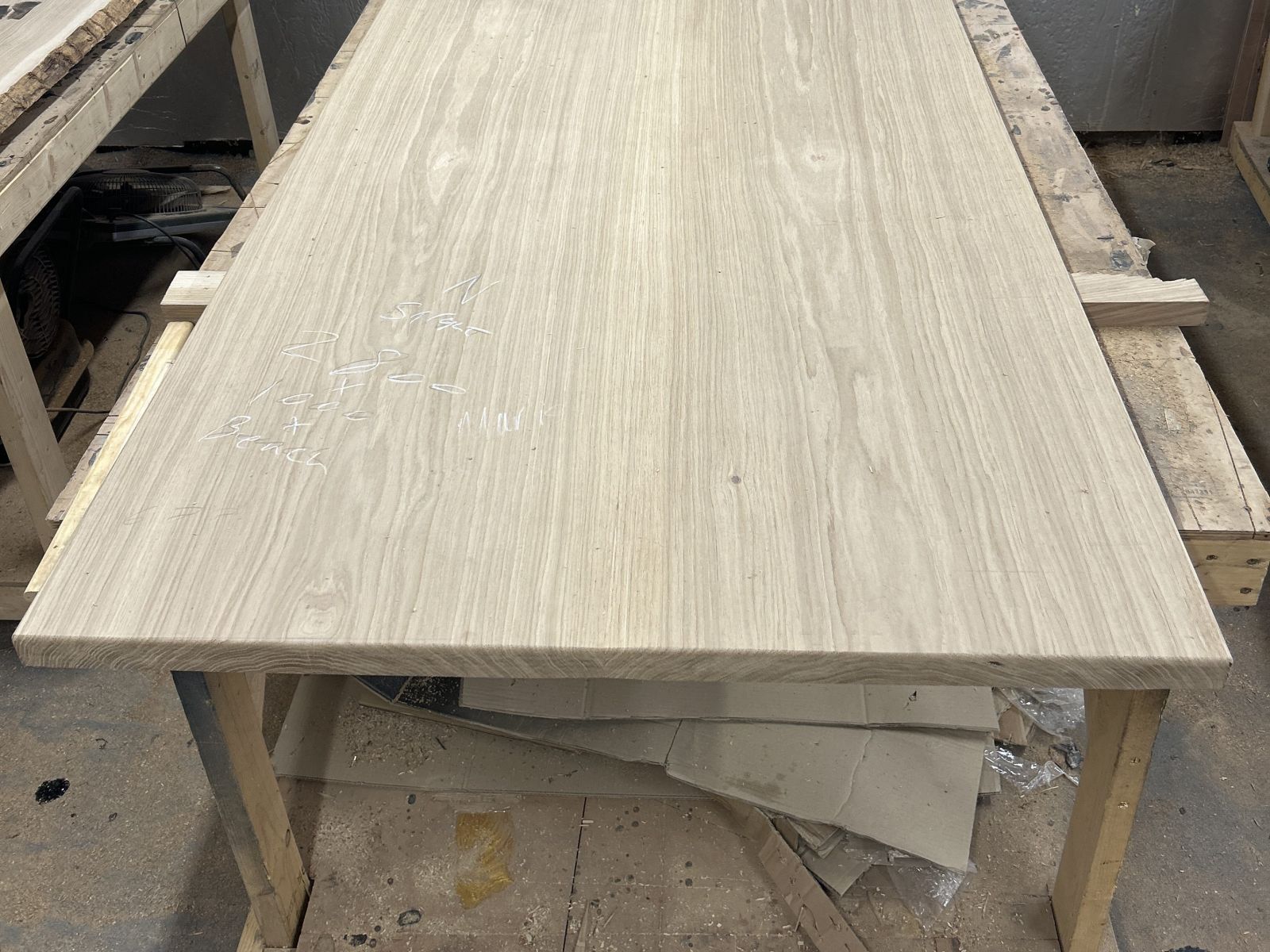
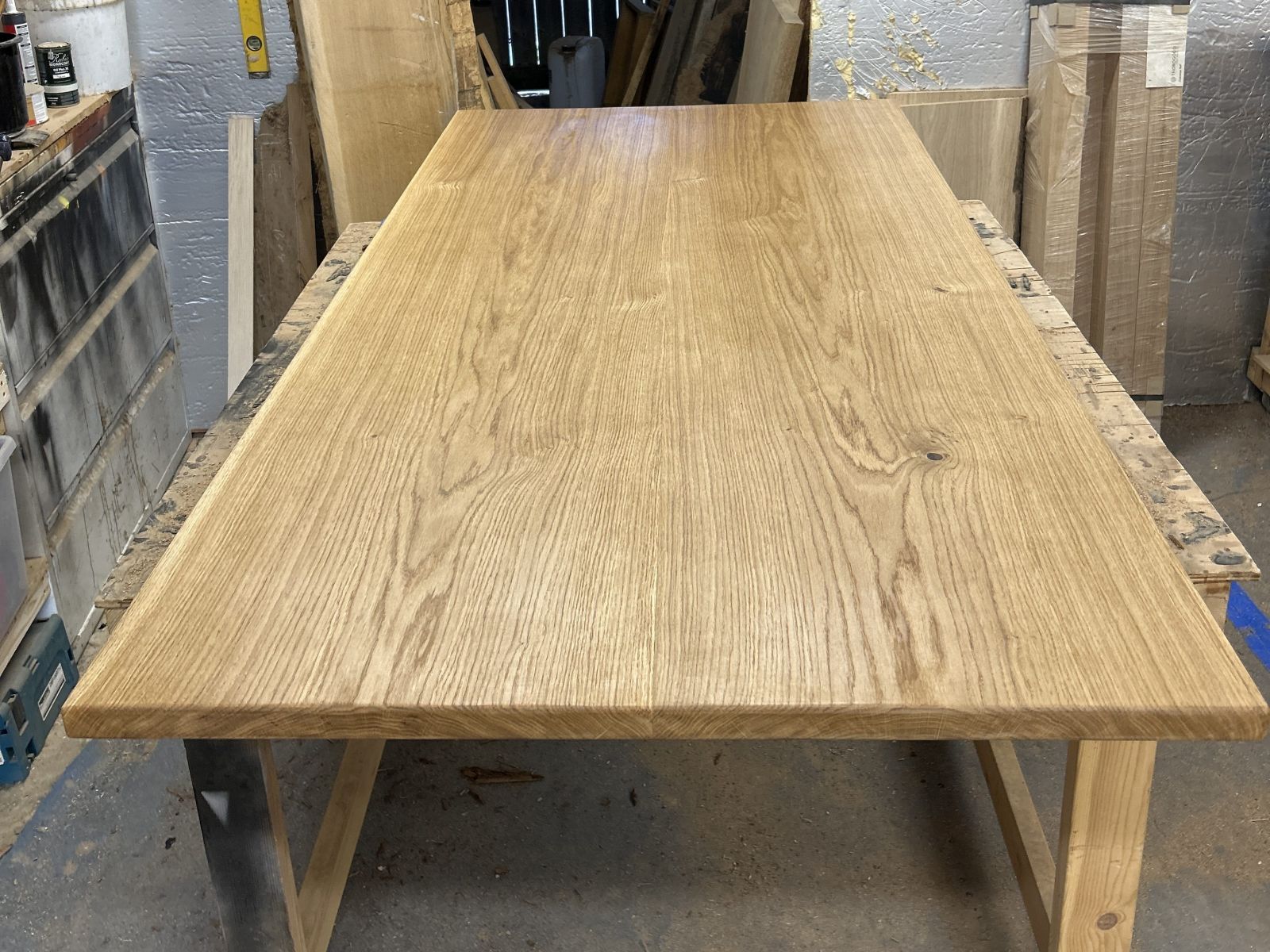
How hardwax oil protects an oak table
We apply two coats of food-safe hardwax oil by hand in our Wickford workshop. It protects the oak while retaining the feel and grain of the timber. Lacquer forms a surface coating and has different care and repair requirements; hardwax oil can often be refreshed or repaired locally.
In daily use that means:
- It resists spills. Wipe them up as they happen, especially red wine, beetroot, turmeric and soy sauce.
- It’s heat-resistant, not heat-proof. Very hot pans and dishes need a mat or trivet.
- It can be renewed. Refresh the oil as needed, typically every six to twelve months depending on use. Ask us for advice before sanding or re-oiling a coloured finish.
Natural is a clear oil without added pigment. Chocolate, Walnut, Black and White Oak are coloured finishes that change the tone while leaving the oak grain visible.
The five finishes
Natural
Clear, food-safe hardwax oil with no pigment. Honey-amber oak, exactly as it comes off the bench.
Clear oil brings out the warm tone and grain of the oak without added pigment. It works with all four steel leg colours and matching oak legs.
Chocolate
Deep, rich, dark-roasted. Suits modern interiors and dark joinery.
A deep brown finish that pairs well with black or anthracite steel. Compare a sample in daylight and evening light to judge how dark it looks in your room.
Walnut
Mid-tone reddish brown. Classic and timeless.
A medium-brown finish on oak, suited to both modern and traditional rooms. Black, anthracite or gold steel legs provide contrast.
Black
Ebonised, smoked-through, statement-piece dark.
A dark finish that retains visible oak grain. Pair it with black or anthracite for a consistent dark tone, or choose lighter legs for contrast.
White Oak
Lightened, lime-washed, Scandi-bright.
A pale finish that softens the oak’s warm tone. It works well with white steel or matching oak legs; check a sample against your walls and flooring.
Screen colours are approximate. Order real oak samples to compare the finishes in your room.
How to choose a colour
1. Start with the floor
Compare the finish with your floor, particularly if it is also wood. Similar tones can blend together; a lighter or darker table gives more contrast. Check samples against nearby cabinets and worktops as well.
2. Judge it in your own light
The colour you see depends on daylight, lamps and the surrounding surfaces. Dark finishes can look different beside a window and under evening lighting. Look at your samples at different times of day before choosing.
3. Think about the legs together with the top
Steel legs come in black, white, gold or anthracite, and solid oak legs are finished in the same oil as the top. Black and anthracite steel work with every finish; white steel suits Natural and White Oak in light rooms; gold under Walnut or Chocolate makes a statement. Our leg styles guide covers every option.
4. Consider the rest of the room
Consider the chairs, cabinets and worktops together. Natural or White Oak can add contrast to darker furniture, while Walnut or Chocolate can bring a warmer brown tone to a pale room. Compare samples beside the furniture you plan to keep.
Order a sample first
For £5 per finish, we will send a hand-finished sample of the French oak used for our tables. Each sample is labelled on the back. We dispatch within two working days by Royal Mail 1st Class, with free postage. Ordering two or three makes it easier to compare colours.
Place the samples beside your floor, chairs and worktop, in daylight and under your usual lamps. They show the finish, but natural differences in the oak mean your table may vary slightly in colour and grain.
Prefer to see them in person? You’re welcome to visit the workshop in Wickford, Essex by appointment, and see every finish on real oak.
How the colour changes over time
Oak gradually changes colour with age and exposure to light. Avoid leaving objects in the same place in strong sunlight for long periods, as this can cause uneven colour. Refresh the oil when the surface starts to look dry.
For cleaning, re-oiling and fixing marks, see our wood care guide. If your top is stained rather than Natural, email us before you re-oil and we’ll advise on the right product for your finish.
Common questions
Which oak finish is most popular?
Natural, a clear food-safe hardwax oil with no added pigment. It protects the timber while keeping the oak’s own colour and grain.
Do stained finishes cost more?
No. All five finishes are the same price, so choose on looks alone.
Is a hardwax-oil finish food safe?
Yes. Every finish we use is a food-safe hardwax oil, applied in two coats by hand in our workshop.
Will my table match the sample exactly?
The sample shows the finish you have chosen, but it is a guide rather than an exact match. Natural differences in the oak can affect colour, grain and how the oil is absorbed. Check it in your room under daylight and evening lighting.
Choosing the rest of the table? Our buying guide takes you through size, edge, legs and delivery.