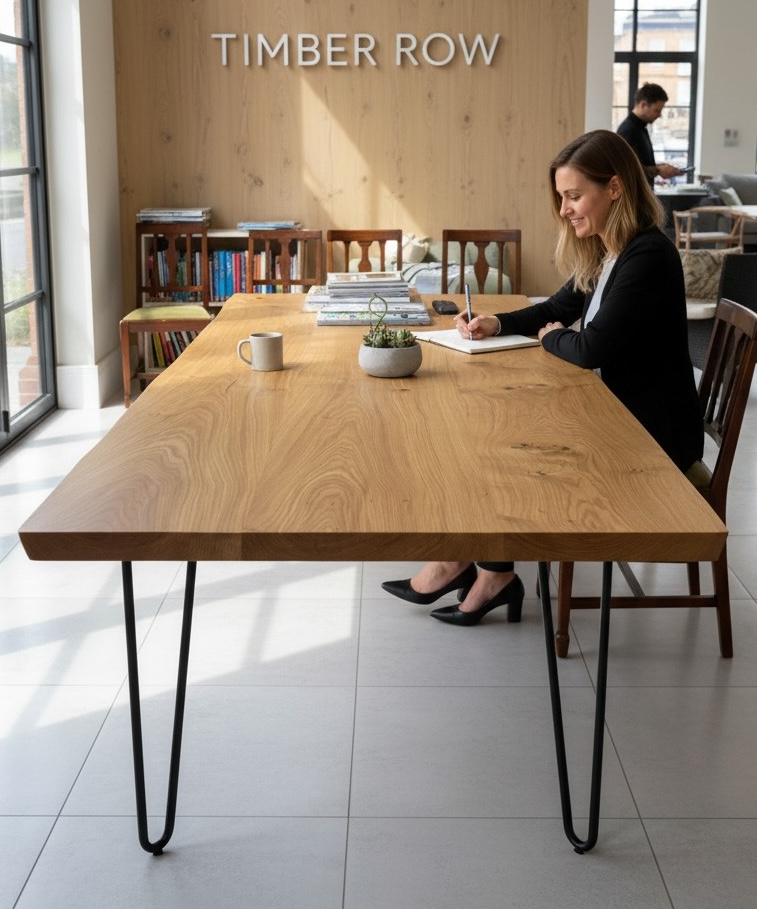
Wood Care Guide

Looking after a solid French oak top.

French oak is tough. It survived a hundred years of mill machinery, weather and footfall, your dining room is a holiday. Three small habits will keep the top looking right for the next fifty years.

The basics

Three habits that keep it looking new.

1

Coasters under hot mugs

Hardwax oil is heat-resistant, not heat-proof. Anything above 80°C, fresh-out-of-the-pot teapots, hot dishes straight from the oven, can mark the finish. A coaster, a placemat or a folded tea-towel does it.

2

Wipe spills as they happen

Especially red wine, beetroot, turmeric, soy sauce and tomato. French oak's open grain absorbs colour fast. Damp cloth, dry cloth, done in 20 seconds.

3

Re-oil every 6–12 months

A 20-minute job with food-safe hardwax oil and a soft cloth brings the top back to fresh. Most customers do it once a year. Heavy-use family tables (think weetabix every morning) every six months.

Daily & weekly

Cleaning without ruining the finish.

99% of cleaning is just a damp cloth. The other 1% is knowing which products to keep away from the table.

  • Damp microfibre, dry microfibre. The whole job most of the time. Wipe with the grain, dry with the grain.
  • Mild washing-up liquid in warm water for greasier marks. A drop or two, not a sink-full. Rinse the cloth, dry the wood immediately.
  • Don't use polish, beeswax sprays, all-purpose cleaners, kitchen sprays or anything containing silicone. They build a film on top of the hardwax oil that goes streaky, attracts dust and stops future re-oiling absorbing properly.
  • Don't use vinegar, lemon juice, or any acidic cleaner. Strips the oil. Same goes for ammonia.
  • Don't soak the wood. A puddle left for half an hour is the enemy. Spilt drink? Wipe it. Don't worry about getting it perfectly dry, just don't leave it sitting.
A clean French oak table top
Six-monthly · The 20-minute refresh

Hardwax oil. Brings it back to new.

Any food-safe hardwax oil works well, Osmo Polyx-Oil and Fiddes Hard Wax Oil are both excellent and widely available from any decent timber merchant or Toolstation. Around 250ml will give you eight or so refreshes, four to five years of normal use.

  1. Clear the table. Wipe with a damp cloth, then dry it.
  2. Lightly sand any marks with fine sandpaper. With the grain. You're not trying to sand the finish off, just smooth out high spots and feather any scratches.
  3. Wipe down again with a clean dry cloth to lift the dust.
  4. Pour a small amount of hardwax oil onto a lint-free cloth (not directly onto the wood). Wipe a thin coat across the whole top, with the grain.
  5. Wait 5 minutes. Buff off any remaining oil with a clean cloth, the wood should feel dry-to-touch, not sticky.
  6. Leave 4 hours before putting plates on it. 24 hours before anything heavy.
Order an oil refill
Hardwax oil application kit
When something goes wrong

Fixing the small stuff.

French oak takes touch-ups like a champion. Most marks come out with a sand and a re-oil, and an exact-match repair is usually invisible.

Water ring

Small white ring from a cold drink left on the table? Most disappear on their own within a day or two as the oil rebalances. If it's still there after a couple of days: lightly sand with fine sandpaper (just the affected area), wipe clean, re-oil that spot. Should be invisible.

Heat mark

White cloudy patch from a hot dish? Same fix as a water ring, but you may need to sand a little harder. If the mark goes deep, sand with medium sandpaper first, then fine, then re-oil the whole board (not just the spot) so the finish blends.

Scratch

Light scratch, fingernail-deep or less, usually disappears with a re-oil alone. Deeper scratch: sand the immediate area with medium sandpaper, finish with fine, re-oil. French oak's natural grain hides repair work brilliantly.

Red wine, beetroot, turmeric (any deep stain)

Caught it in the first 30 seconds? Damp cloth, done. Caught it after a few hours? Sand the stain out with medium sandpaper, work down to fine, re-oil. Don't panic, even quite-set stains lift out of hardwax-oiled oak with a little patience.

Scorch mark

From an actually-hot pan? Sand it back with coarse sandpaper until you reach clean wood, then work up through medium and fine. Re-oil the affected board. If it's gone deeper than 2mm, get in touch, we can repair more serious damage in the workshop, or send a board for in-home blending.

Dent

Solid oak dents, that's part of being real wood. Small dents (anything where you can fit a fingernail tip) often steam back out: lay a damp cloth over the dent, run a hot iron over the cloth for 30 seconds. The water turns to steam, the wood swells back. Re-oil afterwards.

Loose joint or wobble

Underside of the top: there are 8 bolts holding the steel base on. Over the years they can work slightly loose, particularly after the wood has fully acclimatised in your home. Snug them up with the allen key (sent with the table for assembly) every couple of years. Don't overtighten, finger-tight plus a quarter-turn is enough.

Anything bigger?

Email [email protected] with a photo. We'll tell you whether it's a 20-minute home job, a kit-and-instructions job we'll send out, or whether we should collect the top for a workshop repair. Most things are home-fixable.

Still have a question?

Email a photo to [email protected], we'll tell you whether it's a 5-minute home fix or whether to send it back. Real human reply, usually same day.

Get in touch
WhatsApp ususually replies within an hour