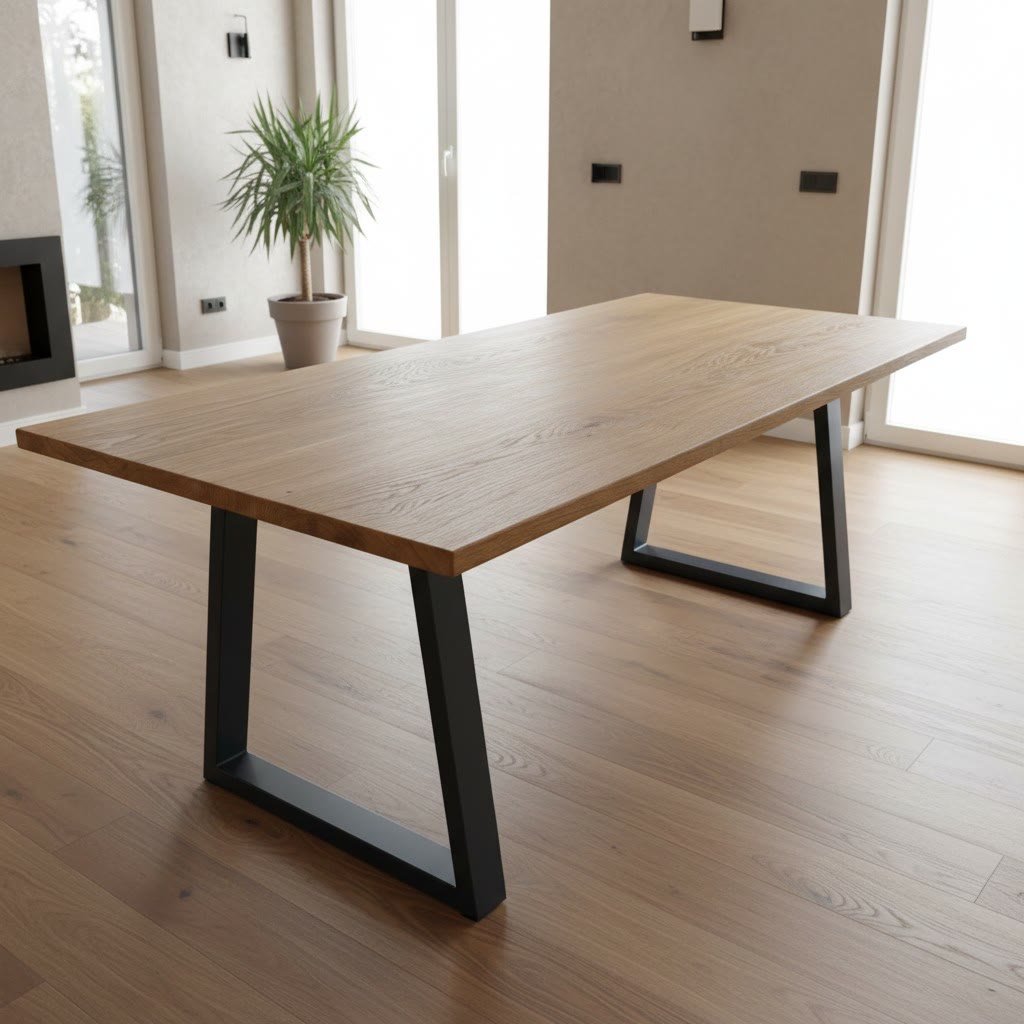
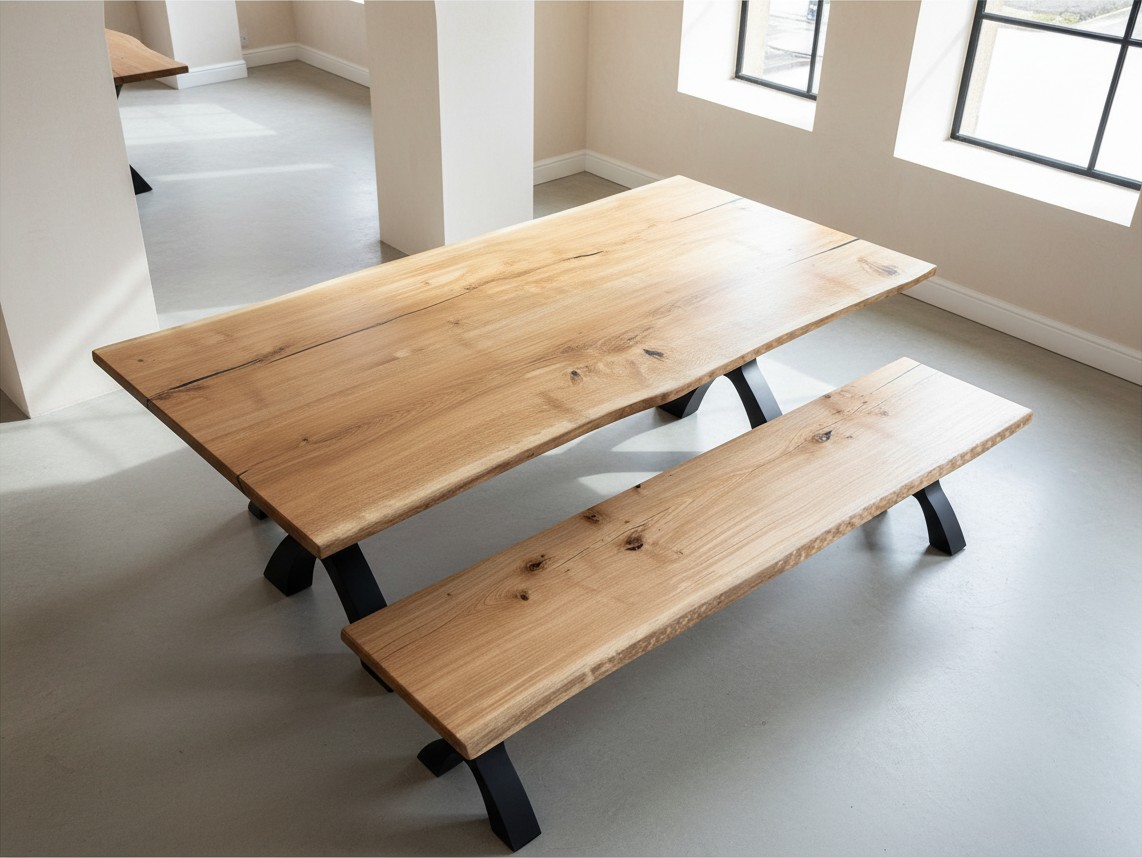
What is the difference between live edge and straight edge?
A straight edge has parallel long sides, cut to the width you order and rounded along the top and bottom for comfort. It gives the table a regular outline that is easy to plan around.
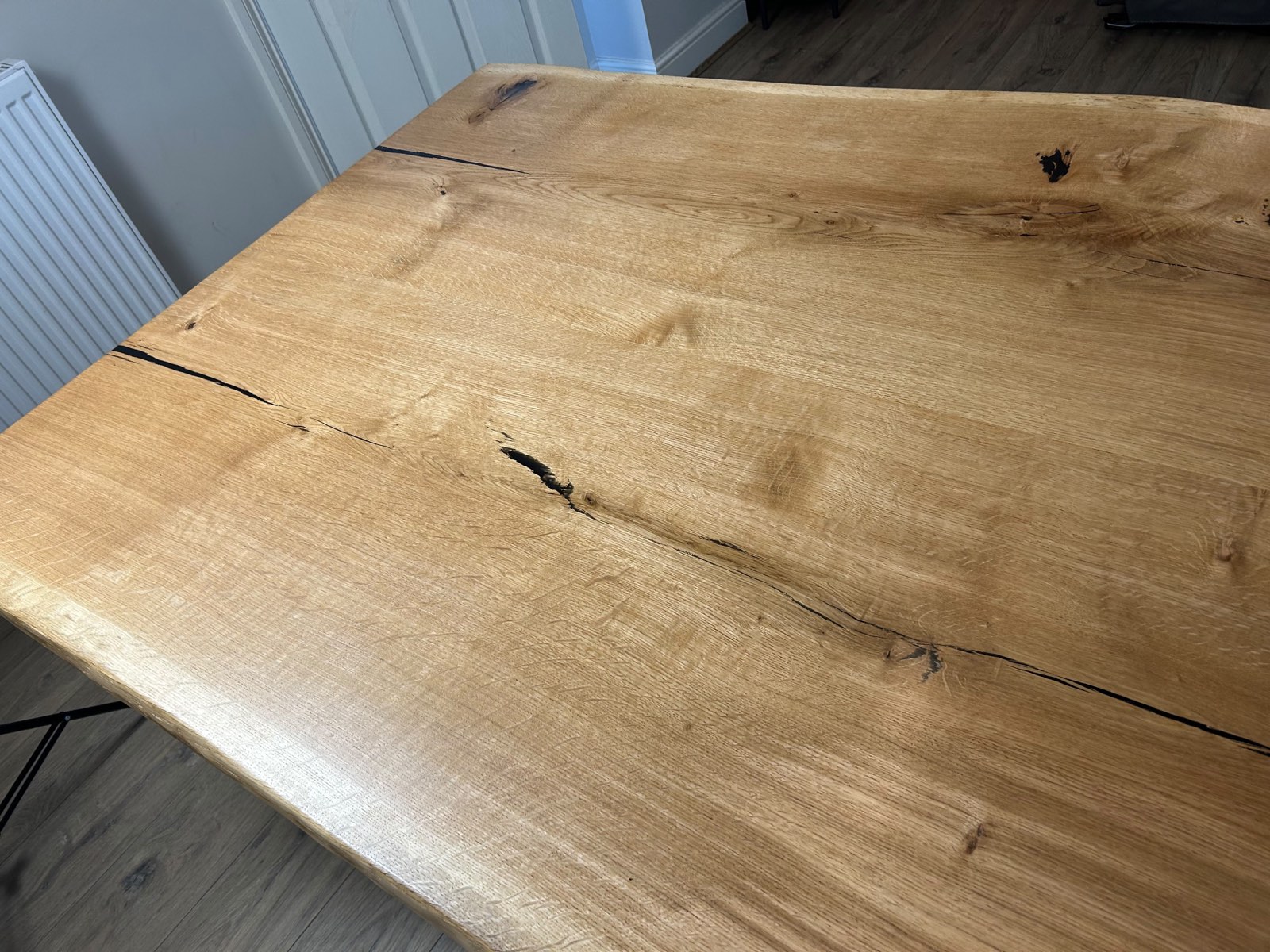
A live edge follows the natural outline of the tree beneath the bark. We retain that shape, then sand and oil the edge so it is smooth to sit at. The curves vary from board to board, making each tabletop different.
Our tops are made from two wide slabs joined along their length. On a live-edge table, each long side is the natural edge of one slab. The short ends are crosscut square on every table, whichever edge you choose.
Side by side
| Straight edge | Live edge | |
|---|---|---|
| Long sides | Sawn straight and parallel, rounded over top and bottom | The natural outline of each slab, sanded and oiled |
| Short ends | Cut square | Cut square |
| Width | Exactly the width you order | Nominal; varies by up to about 5cm along the length |
| Look | Straight, regular outline | Natural curves that vary with each board |
| Price | Same | Same |
| Finishes and legs | Any of the five finishes and any leg | Any of the five finishes and any leg |
How to choose
Start with the room
Choose a straight edge if you prefer a regular outline or want the table to follow the lines of your kitchen and furniture. A live edge adds a more natural shape and works well where you want to make a feature of the oak. Either can suit a modern or traditional room.
Check how exact the width needs to be
A live-edge top can vary in width by up to about 5cm along its length. Leave clearance from the widest point when planning the room. If you need a precise width for a tight space, choose a straight edge. Our size guide explains the space to allow around the table.
Think about the legs
Both edges are available with every leg style offered for your table size. Simple steel frames give a straight-edge top a clean outline; X-frame, designer steel and solid oak legs also work with live-edge tops. Compare the photographs and our leg styles guide to find a combination you like.
Character comes with either edge
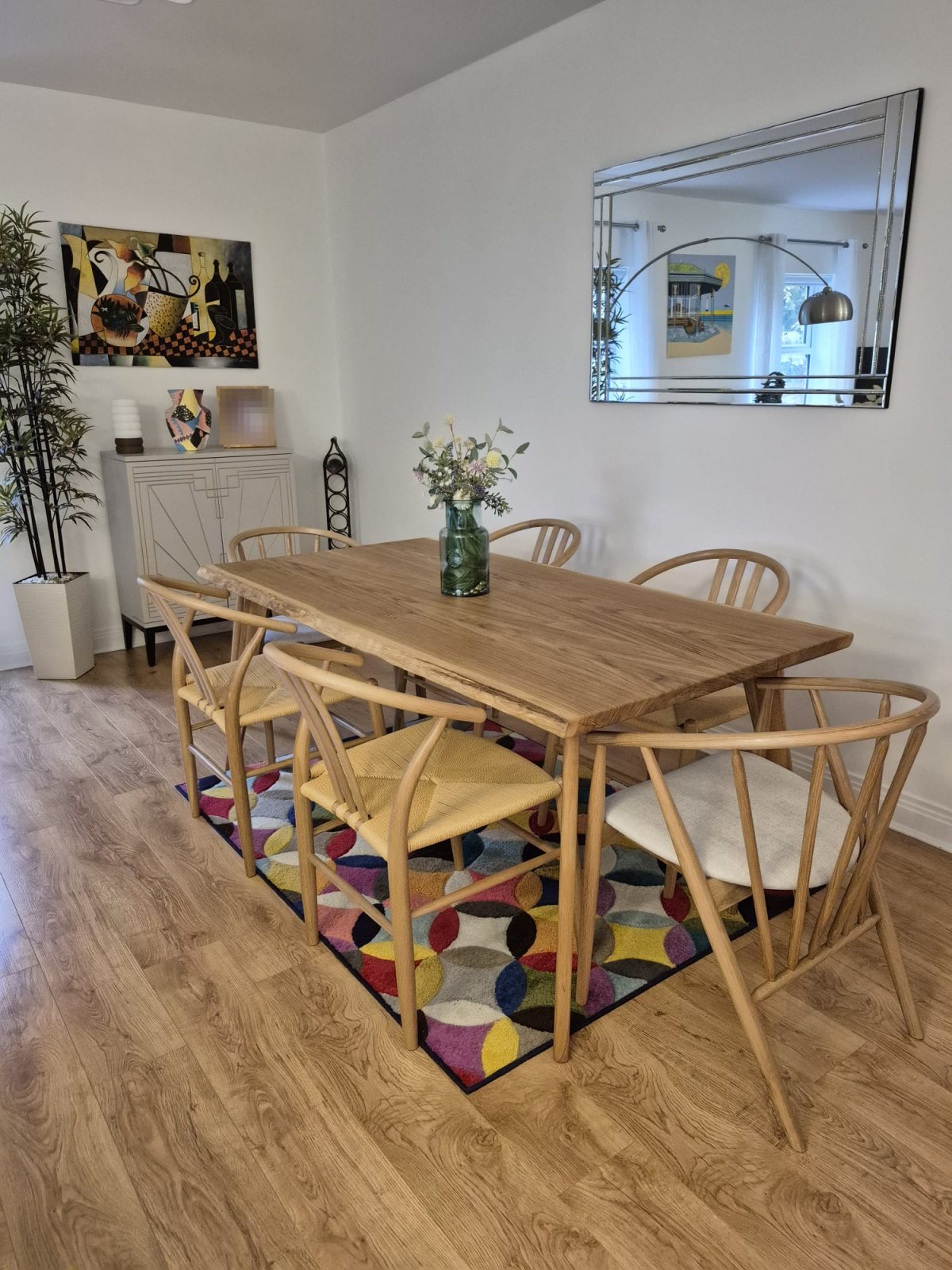
Both edges use the same 37mm solid French oak and show the same natural grain, knots and colour variation. The difference is the outline of the long sides.
Want a single slab with two live edges? Every Timber Row top is two slabs joined through the centre. A single slab wide enough for a dining table is rarer timber and a bespoke job: our sister company Sorrell & Smith makes those to commission.
Looking after it
Both edges need the same care: wipe up spills, use mats under hot dishes and refresh the hardwax oil as needed, typically every six to twelve months depending on use. Include the edges when cleaning and oiling. See our wood care guide for advice.
Common questions
Does a live edge cost more?
Not on a Timber Row table. Straight and live edges are the same price on every size, so the choice is purely about the look you prefer.
How wide is a live edge table?
The width you order is nominal. A live edge follows the natural shape of the board, so the width varies by up to about 5cm along the length of the table. A straight-edged top is cut to the exact width you choose.
Which edges of the table are live?
The two long sides. The top is made from two slabs joined along their length, so each long side is the natural outer edge of one slab. The short ends are cut square on every table.
Is a live edge rough or sharp to sit at?
No. The natural edge is kept, but it’s carefully sanded smooth and finished with the same hardwax oil as the rest of the top.
Still deciding on the rest of the table? Our buying guide takes you through size, legs, finish and delivery.